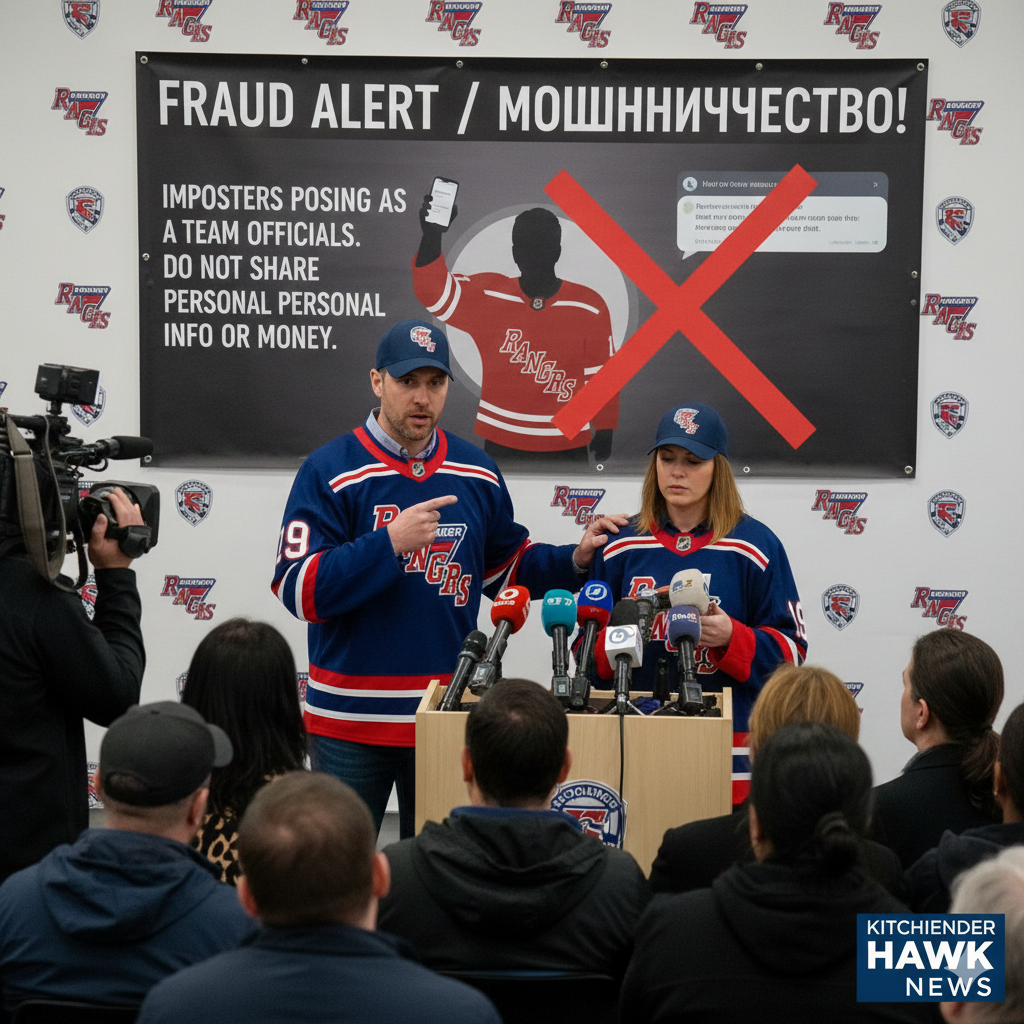
The Kitchener Rangers organization has issued an urgent warning to the public, local businesses, and potential partners after receiving multiple reports of individuals impersonating team officials in an apparent attempt to commit fraud. According to the club, scammers have been reaching out via email and other communication channels while falsely claiming to represent the Rangers, targeting vendors and partners with deceptive offers tied to the upcoming hockey season.
In a statement shared on social media, the Rangers emphasized that these attempts are part of what they have described as a “potential scam” and urged anyone who receives such communication to proceed with extreme caution. The organization has confirmed that although it continues to build partnerships and coordinate vendor opportunities for the 2025–26 season, all legitimate communications follow strict procedures and official channels.
Reports of Impersonation Raise Serious Concerns
The team’s warning follows incidents in which local businesses were contacted by unknown individuals claiming to be members of the Kitchener Rangers’ operational or business staff. These impersonators allegedly used deceptive language and pressured their targets into making payments in exchange for opportunities to sell merchandise or secure promotional space at Rangers’ home games.
Fraudulent Offers Tied to Upcoming Home Games
According to the statement, scammers have been promising access to vendor space, merchandise tables, and other promotional opportunities at games during the 2025–26 season. These offers were presented as exclusive or time-sensitive, a tactic often used by fraudsters to create urgency and reduce the likelihood that victims will verify the legitimacy of the request.
“We have received reports of individuals contacting local businesses while falsely claiming to represent our organization,” the Rangers said in their public notice. “These scammers are attempting to collect payment in exchange for vendor space, merchandise tables, or promotional opportunities at upcoming home games during the 2025–26 season.”
By using the team’s name and reputation, the individuals involved in the scheme are attempting to exploit the trust and recognition the organization has built within the community over many years.
Requests for Advance Payments Highlight Red Flags
One of the most concerning aspects of the reported activity is that, in some cases, the impersonators have asked for advance payments through unsecured or informal channels. This tactic is a major red flag, according to the Rangers, and is not part of the club’s standard business practices.
Legitimate Rangers Process Does Not Include Upfront Demands
The organization made it clear that it will never enter into an agreement without proper, documented communication and formal approval. Additionally, it does not ask businesses or partners to send advance payment through unverified methods.
The Rangers stressed three important points for anyone approached with an offer:
-
The organization will not request advance payments for vendor or promotional opportunities.
-
All legitimate communication will come from official email accounts ending in “@kitchenerrangers.com.”
-
Any agreement will include prior direct communication with verified staff members and formal documentation.
These distinctions are meant to help businesses and individuals identify potential scams before any money or personal information is shared.
The Growing Threat of Sports-Related Scams
Scammers targeting sports teams and fan communities has become an increasing concern across North America. As organizations engage with more vendors, sponsors, and community partners, criminals see an opportunity to use familiar brand names to deceive unsuspecting targets.
Why Local Businesses Are Often Targeted
Small and mid-sized businesses are particularly vulnerable in situations like this because they are often eager to find high-profile promotional opportunities. Being associated with a major junior hockey organization such as the Kitchener Rangers can offer valuable exposure, so offers that appear legitimate may seem like an exciting chance to grow their brand.
Fraudsters take advantage of this enthusiasm by presenting professional-looking emails, strong offers, and convincing language. In some cases, scams can be difficult to detect at first glance, especially if the sender’s name resembles that of a real staff member.
This makes direct verification with the organization more important than ever.
How to Verify Legitimate Rangers Communications
The Kitchener Rangers are encouraging anyone who receives an email or message claiming to be from the organization to verify its authenticity before taking any action. Even if the message appears legitimate or contains detailed information about upcoming games, vendor areas, or sponsorship packages, it should be approached with caution.
Steps to Protect Yourself
If you or your business receive an unexpected message claiming to be from the Rangers, the organization recommends:
-
Checking the sender’s email address carefully for the official “@kitchenerrangers.com” domain
-
Avoiding clicking on any links or downloading attachments in suspicious messages
-
Refraining from sending payments or sharing sensitive information
-
Reaching out directly to the Rangers’ business operations department for verification
Contacting the organization through its official website or known phone numbers is the safest way to confirm whether an offer is real.
Rangers Take Proactive Approach to Community Safety
By issuing a public warning, the Kitchener Rangers are taking a proactive stance to protect the community that supports them. The organization has deep ties to local businesses, families, and fans, and this notice is part of its effort to safeguard those relationships from being exploited.
Commitment to Transparency and Support
The club’s decision to swiftly address the situation highlights its commitment to transparency. Rather than quietly handling the matter internally, the Rangers chose to inform the public, ensuring that others do not fall victim to the same scheme.
They also continued to encourage open communication, stating that anyone who is unsure about the legitimacy of an email should contact their official business operations staff directly for clarification.
This open-door approach helps reinforce trust between the team and the greater community.
A Reminder to Stay Vigilant in the Digital Age
As online communication becomes the primary means of conducting business, the risk of impersonation and fraud continues to increase. The Rangers’ warning is a reminder not only to hockey-related businesses but also to the general public about the importance of being cautious with digital correspondence.
Recognizing Common Scam Tactics
Some key warning signs of potential fraud attempts include:
-
Requests for immediate or advance payments
-
Unusual or unprofessional language in messages
-
Slight alterations in email addresses or spelling
-
Pressure to act quickly without proper documentation
-
Lack of verifiable contact information
Staying alert to these tactics can make a significant difference in preventing financial loss and identity theft.
Developing Story with More Information to Come
At this stage, the Kitchener Rangers have described the situation as a developing story. As investigations continue and more information becomes available, additional updates are expected. The club may also work with local authorities to track and stop those responsible for the scam attempts.
In the meantime, businesses, vendors, and fans are encouraged to remain cautious, verify all communications, and report any suspicious activity.
Conclusion: Protecting the Community Through Awareness
The Kitchener Rangers’ warning serves as a critical reminder that even trusted institutions can be used as tools by criminals looking to exploit unsuspecting victims. By paying close attention to how and where communication originates, local businesses and community members can protect themselves from falling victim to fraudulent schemes.
Through transparency, public outreach, and a clear set of guidelines for identifying legitimate contact, the Rangers are not only defending their name but also standing up for the people who support them season after season.
As more details emerge, the organization has pledged to keep the public informed. Until then, vigilance remains the most effective defense against deception.
Leave a Reply