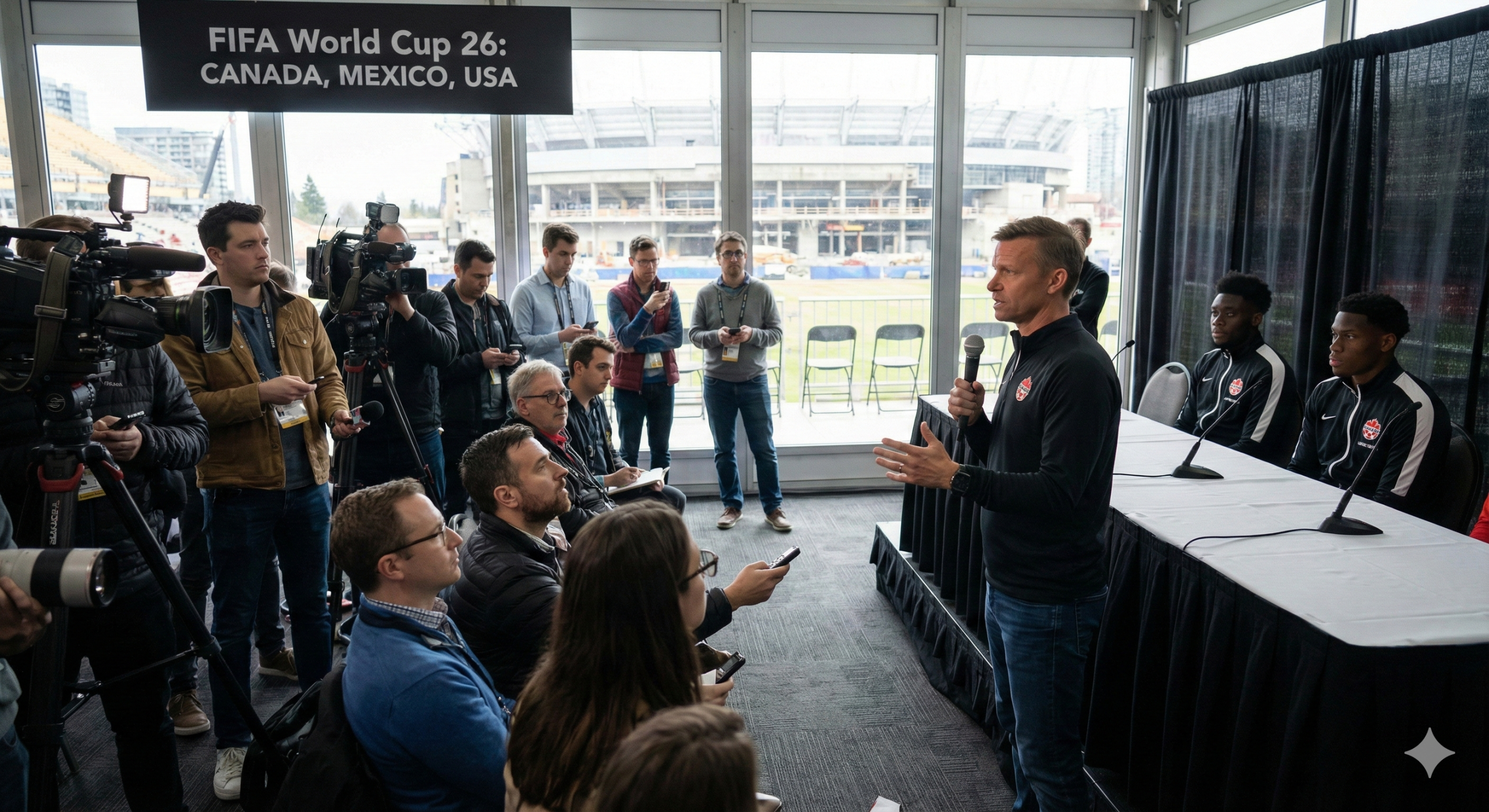
After an extended and somewhat awkward draw ceremony at the Kennedy Center in Washington, D.C., the 12 groups for the 23rd FIFA World Cup have officially been revealed — and the path ahead for Canada has come into sharper focus.
One of the most intriguing possibilities emerging from the draw is that Canada could open its 2026 World Cup campaign against Italy in Toronto. For a country that, not long ago, struggled to qualify for major tournaments, the idea of hosting a European powerhouse on home soil marks a remarkable evolution in its soccer journey.
How Did Canada Get Here?
Canada’s rapid rise in international football can be attributed to a combination of strong youth development, a talented generation of players, and the momentum generated from co-hosting responsibilities. The 2026 tournament, shared by Canada, the United States, and Mexico, offers a rare opportunity for the Canadian program to showcase how much it has grown in recent years.
How Will Canada Perform Against the World’s Best?
The matchups will be challenging, but analysts believe Canada’s chances largely depend on consistency, squad health, and the ability to capitalize on home-field advantage. Facing elite teams—potentially including Italy—will be a major test, but also an invaluable learning experience as the program continues to mature.
Can This World Cup “Work”?
Beyond the sporting questions, the 2026 World Cup arrives amid geopolitical tension and complicated relationships between the three host nations. With the U.S. navigating political divisions—especially surrounding figures like Donald Trump—Canada and Mexico will also face logistical and diplomatic hurdles.
Weather is another concern. With matches scheduled across vast regions and climate conditions, organizers must prepare for extreme heat in some locations while ensuring player safety and fan comfort.
Expert Insight
Host Devang Desai sat down with David Gass, founder of Kickback Soccer Media, to break down Canada’s tournament outlook. Their conversation explores Canada’s tactical prospects, FIFA’s ongoing political balancing act with U.S. leadership, and the broader question of whether this uniquely structured World Cup can deliver a cohesive and successful experience when it kicks off next summer.
Leave a Reply